A structured, consultation-led assessment across the 11 dimensions of talent management, from recruitment and performance to data, technology and team competency. It identifies where your organisation is strong, where the gaps sit, and what to prioritise first, before any solution gets recommended.
Rather than moving straight to a solution, the Maturity Assessment starts by understanding where things stand today. Through structured conversations with key people across your organisation, it builds a clear, evidence-based picture of strengths and gaps across all 11 dimensions of talent management.
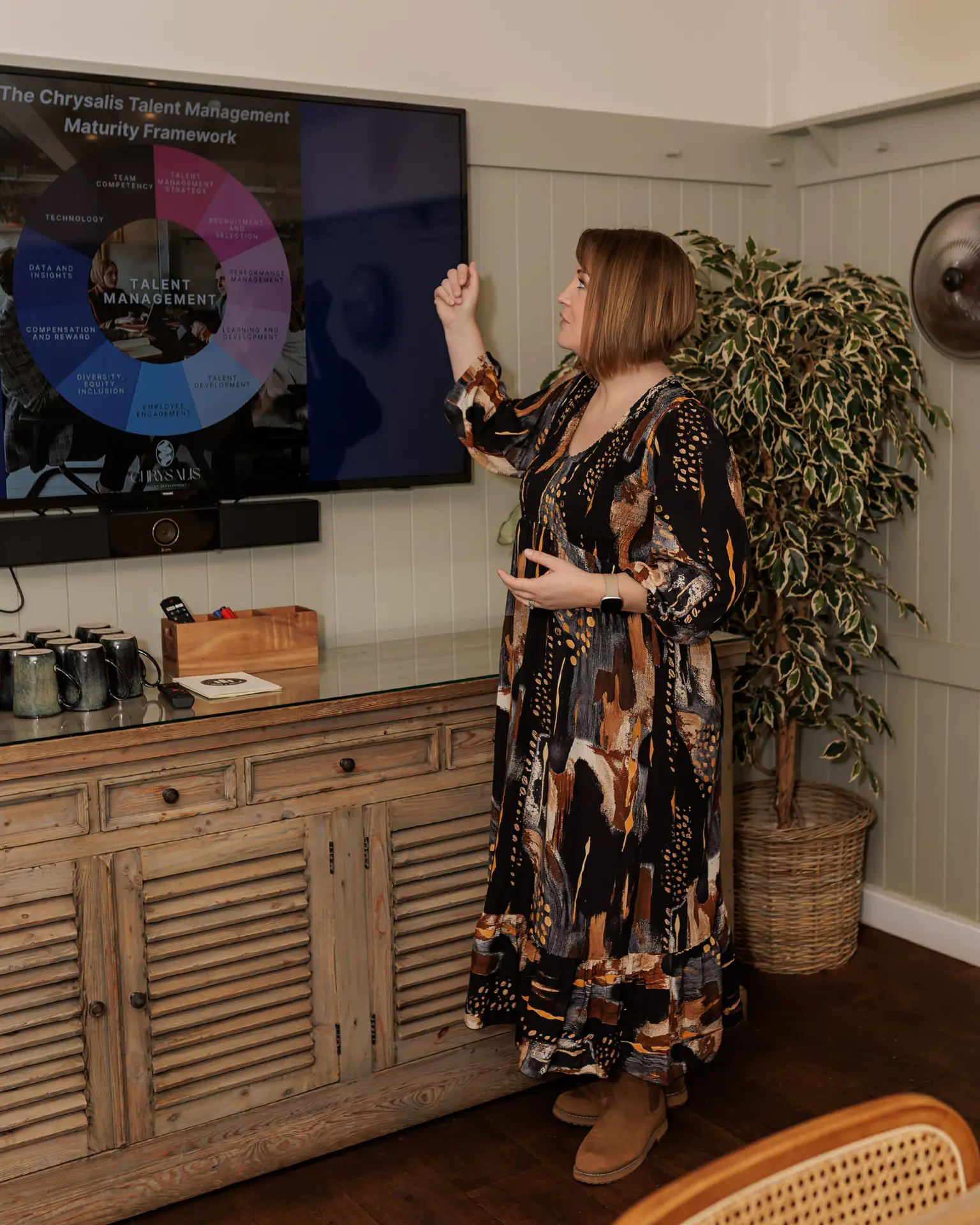
The assessment reviews all eleven dimensions of the Chrysalis Talent Management Maturity Framework. Each is examined on its own terms, then read together, because the dimensions interact. Recruitment standards determine who enters the pipeline, performance data determines who becomes visible for progression, and reward signals what the organisation actually values.
Hover a segment to explore what each dimension covers.
Every assessment begins with understanding your organisation’s context, priorities and current challenges before anything is measured.
Talent Management Strategy, Recruitment and Selection, Performance Management, Learning and Development, Talent Development, Employee Engagement, DEI, Compensation and Reward, Data and Insights, Technology, and Team Competency are each reviewed in turn.
The result is a clear, evidence-based summary of where your organisation is strong, where the gaps sit, and what would move the needle furthest.
Findings are talked through in a debrief conversation, with recommendations shaped around what your organisation actually needs rather than a generic template.
A written summary of current maturity across all eleven dimensions, showing where the organisation is strong and where the gaps sit.
A prioritised view of what to address first, sequenced by what will move furthest rather than by what is easiest to start. Recommendations are specific to your context and are made only where the evidence supports them.
A debrief conversation to work through the findings with the people who will act on them, so the conclusions are understood rather than handed over.
Where the findings point to work outside the scope of this practice, that is said plainly. The purpose of a diagnostic is an accurate picture, not a route to a predetermined proposal.
Book a free discovery call with Verity today
It depends on the size and complexity of the organisation. Most run across a series of structured conversations over a few weeks, followed by a debrief where findings and recommendations are worked through.
Typically a cross-section of the organisation, from HR and people leaders through to managers and team members, so the picture reflects how things work day to day rather than how they are described at the top.
You receive an evidence-based summary of strengths and gaps, a prioritised view of what to address first, and a debrief to work through it. What follows is your decision, and no engagement is assumed.
Talent Management Strategy, Recruitment and Selection, Performance Management, Learning and Development, Talent Development, Employee Engagement, Diversity Equity and Inclusion, Compensation and Reward, Data and Insights, Technology, and Team Competency.
A consultation. The assessment is led through structured conversations rather than a form, because the distinction between a policy existing and a policy being used rarely survives a multiple-choice question. A digital questionnaire-based product is in development separately.
An engagement survey measures how people feel. A maturity assessment examines how the talent system works: whether practices exist, whether they are applied consistently, and whether they are measured. Engagement is one of the eleven dimensions rather than the whole picture.
It can be narrowed where scope is genuinely constrained, though the full review is usually more useful. Gaps often originate in a dimension nobody suspected, and a narrowed assessment cannot surface that.
No. SMEs without a dedicated HR function often gain most, because talent decisions there sit directly with directors alongside operational responsibilities. The eleven dimensions apply regardless of headcount.
Every engagement begins with understanding your organisation’s current position. A Maturity Assessment or a discovery conversation identifies the priorities before any solution gets recommended.