
Individual and organisation-wide talent assessments, including development centre design and delivery, that identify high potential and inform confident, evidence-based people decisions.
Whether the question is who is ready for a bigger role, which candidates have the potential to grow into leadership, or how a team measures up against the capability a business needs, assessment replaces opinion with evidence. Exercises, tools and criteria are built around the specific role, level or decision at hand.

Assessment answers three different questions, and the design changes depending on which one is being asked.
Capability is what someone can demonstrably do now, measured against the requirements of a specific role or level. Potential is the capacity to grow into responsibility not yet held, which is a different judgement and needs different evidence. Readiness is whether that growth has already happened enough to justify the move.
Conflating the three is the most common reason assessment produces decisions people later regret. Someone highly capable in their current role is not automatically ready for the next one, and someone not yet ready may still hold clear potential worth developing.
Each assessment is built around the question actually being asked, using criteria drawn from the role and the organisation rather than from a generic competency library.
Every assessment starts with clarity on what it needs to answer, whether that is succession readiness, identifying high potential, or assessing candidates for a specific role.
Exercises, tools and criteria are designed around the specific role, level or capability being assessed, not adapted from a generic off-the-shelf test.
Individual assessments or a full development centre are delivered, combining structured exercises, tools and observation to build a rounded, evidence-based picture.
Findings are brought together into a clear, evidence-based summary and talked through in a debrief, with recommendations shaped around what happens next.
A development centre puts a group through a structured set of exercises, simulations and observed tasks built to mirror the situations the role actually involves.
The value comes from the design. Exercises drawn from real scenarios surface how someone reasons, prioritises and handles pressure in ways an interview cannot reach. Multiple observers and multiple exercises mean no single impression carries the decision.
Design and delivery are both covered, from defining what the centre needs to measure through to running it and working through the findings afterwards.
The output is developmental as well as evaluative. Participants leave with a clear view of their own strengths and gaps, which makes the process worth their time regardless of the decision it informs.
Whether exploring where to start or ready to book a discovery call, reaching out is the first step forward.
Assessment is worth the investment where the decision carries real consequence and the available evidence is thin or contested.
Succession shortlists where opinion is divided. Progression decisions where the candidates come from different parts of the business and are not directly comparable. External hires at a level where a mistake is expensive. Restructures where capability needs to be judged consistently across people who have never been measured the same way.
It is less useful where the decision is already clear, or where the real problem is that no one has defined what the role requires. In that case the definition work comes first.
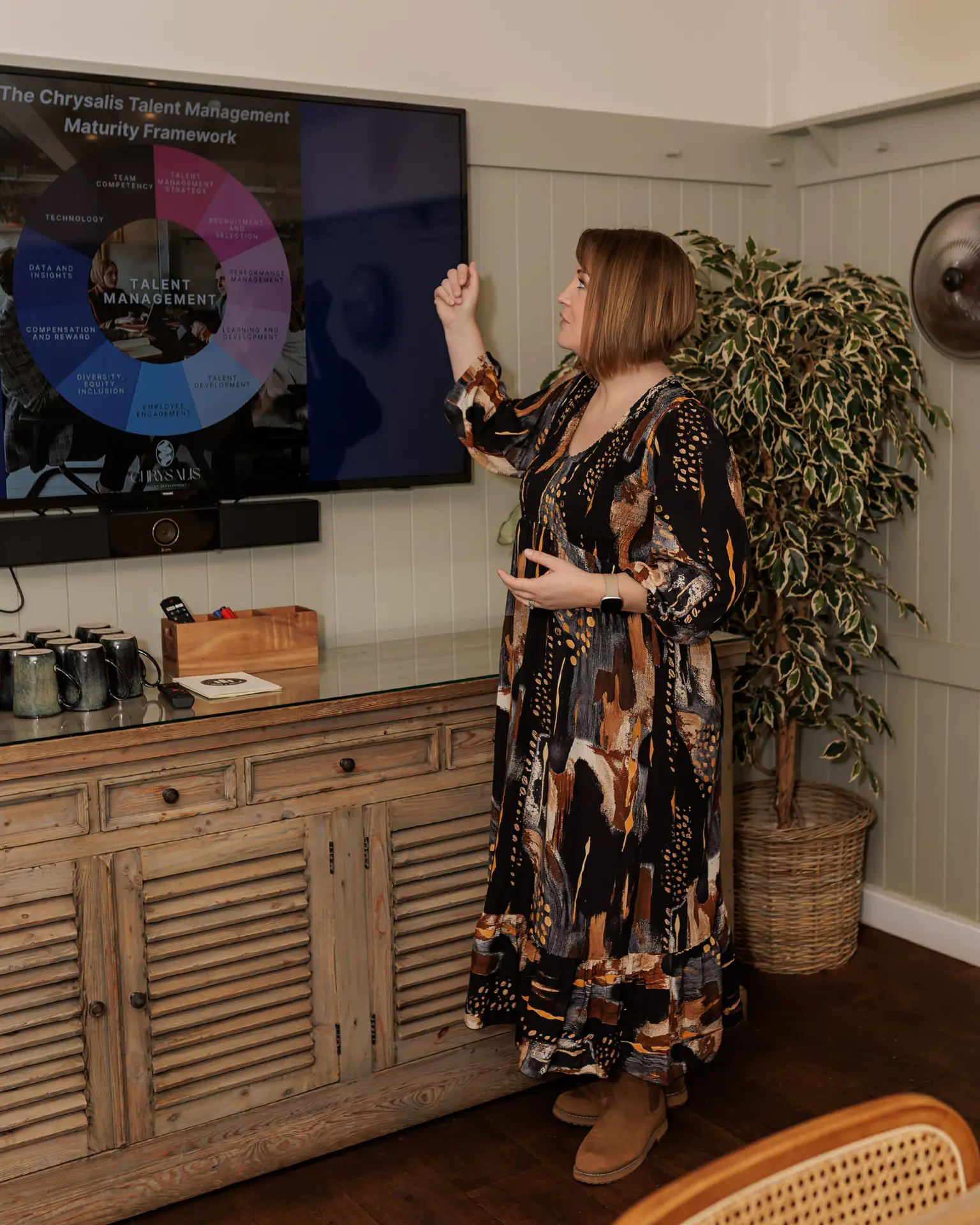
Assessment decisions carry weight. Getting them right protects the individual being assessed and the organisation making the decision, replacing gut feel with a structured, defensible process.
Book a free discovery call with Verity today
An interview relies on self-report. An assessment uses structured exercises and criteria to test how someone actually performs against the role or level in question, replacing impression with evidence.
A mix of exercises, simulations and structured observation designed around real scenarios, giving a rounded, evidence-based view rather than a single snapshot.
Findings are talked through in a debrief conversation, with clear next steps shaped around what the decision actually requires.
Scale and purpose. An individual assessment answers a question about one person. A development centre runs a group through a common set of exercises with multiple observers, which allows candidates to be compared on the same basis and produces developmental feedback alongside the decision.
Criteria are defined before anyone is assessed, the same exercises and standards apply to everyone in scope, and more than one observer contributes to the evidence. Judgements are recorded against specific criteria rather than summarised as an overall impression, which makes them reviewable.
Yes. The design differs, because internal candidates bring a track record that external ones do not, but the underlying approach of testing against defined criteria applies to both.
Exercises are built for the role rather than selected from a catalogue. Depending on what is being measured that can include work simulations, case analysis, structured scenarios and observed group tasks, combined so that no single exercise carries the judgement.
Yes. Feedback is part of the design rather than an optional extra. Participants get a clear view of their demonstrated strengths and development areas, which is what makes the process worth their time.
Every engagement begins with understanding your organisation’s current position. A Talent Management Maturity Assessment or a discovery conversation identifies the priorities before any solution gets recommended.